.png)








Why Talent Acquisition Is Becoming a Strategic Workforce Partner in Insurance
According to research by Everest, 43% of organisations say their business strategy has evolved faster than their workforce model. For insurers navigating artificial intelligence, new technologies, emerging risks and changing customer expectations, that gap creates a growing challenge: ensuring the workforce can keep pace with where business is heading.
As the industry changes, so too do the skills and workforce models insurers need to support what comes next. This is creating a broader role for Talent Acquisition (TA), extending beyond filling vacancies to helping organisations understand the capabilities they will need, how those capabilities can be developed or accessed, and where people and technology may need to work differently as the workforce evolves.
Moving towards skills-based hiring
Skills requirements are also changing quickly. Insurers may find themselves recruiting for capabilities that were not part of the workforce plan a few years ago, while the skills taxonomy used to define roles has not necessarily evolved at the same pace.
There is a practical consideration too. In smaller teams, managers may have less capacity to develop someone into a role and may therefore favour candidates who can contribute quickly. That can make it harder to shift towards skills-based hiring, even where a candidate has strong adjacent or transferable capabilities.
Skills-based hiring therefore requires both the mechanics to support it and change management around why the organisation is taking a different approach.
Start with problems and pain points
AI and automation can create useful opportunities for insurance organisations, but the starting point should be the business problem rather than the technology itself.
When the conversation begins with a particular tool or vendor, there is a risk that organisations start looking for somewhere to use the technology rather than asking where it would genuinely improve the way work gets done. Starting with the problem gives leaders a clearer basis for deciding whether AI, automation, or another intervention is the right answer.
For TA leaders, that might mean looking at repetitive work that consumes recruiter capacity, areas where delays affect candidates or hiring managers, or processes where better information could improve decision-making. The question is not simply whether something can be automated, but what improves as a result.
AI is also about starting and making progress. Rather than chasing the goal, organisations need to chase the progress and the journey, constantly looking, reviewing and evaluating as their AI roadmap develops.
Build a robust capacity plan
The same discipline needs to apply when AI and automation start influencing workforce decisions.
Many organisations are looking for ways to increase productivity while managing workforce costs. But assumptions about future automation need to be tested before they are built into headcount decisions. If capacity is reduced before the expected technology benefits are realised, the remaining team may be left carrying more work than anticipated.
Instead, workforce decisions should start with a robust capacity plan that layers in external factors alongside internal factors and complexities.
Leaders then need to understand what the technology, AI or automation is anticipated to give back in terms of more time for the recruiter or another person, and at what point that additional capacity will be realised.
For insurers, this creates a closer connection between technology decisions and workforce planning.
From attraction through to alumni
As TA becomes a strategic capability leader, its remit also extends beyond recruitment. Talent leaders need to consider how they lead from attraction through to alumni and how they work synergistically with partners within learning and development and bring HR into the mix.
This means looking at the roadmap and creating the goals, while understanding how talent is attracted, developed and retained across the organisation.
For insurance TA leaders, becoming a workforce strategist therefore means connecting future skills, skills-based hiring, technology and capacity planning with the wider talent lifecycle. The opportunity is to help the organisation think beyond who it needs to hire next and consider how the workforce itself may need to evolve over time.
How an outsourcing partner can support workforce change
Building a future-ready insurance workforce requires more than effective recruitment. From workforce planning and RPO to contingent workforce solutions and project hiring, our specialists can help organisations access the skills they need today while preparing for what comes next. Speak with our experts to get started.
Meet our expert RPO team

Jenny Fulton
Managing Director APAC - Outsourcing, Robert Walters
Jenny leads Robert Walters' most strategic client partnerships across APAC, bringing deep regional expertise to help organisations navigate talent opportunities across mature and emerging markets.
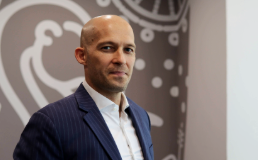
Charlie O'Farrell
Head of Growth, APAC
Charlie drives growth initiatives across APAC, leveraging over 15 years of experience in operations and growth to deliver strategic, tailored workforce solutions that help clients thrive.
FAQs
-
What is talent acquisition in insurance?
Talent acquisition in insurance is the process of identifying, attracting and hiring the skills an organisation needs. As workforce requirements change, TA is increasingly also helping insurers understand future skills and capability needs. -
What is skills-based hiring in insurance?
Skills-based hiring focuses on the skills and capabilities someone can bring to a role rather than relying solely on traditional qualifications or years of experience. It requires organisations to understand their skills taxonomy and what good looks like for different capabilities. -
How is AI changing talent acquisition in insurance?
AI can help automate repetitive tasks and create more time for higher-value activity. Effective adoption starts with understanding the problems and pain points within the organisation before deciding where AI or automation can add value. -
How can AI support workforce planning in insurance?
AI and automation can change how work is delivered and the capacity organisations need. A robust capacity plan can help insurers understand what technology is anticipated to give back in terms of time and when that additional capacity may be realised. -
How is talent acquisition changing in insurance?
Talent acquisition is becoming a more strategic capability. Its role can extend beyond recruitment from attraction through to alumni, with TA working more closely with HR, learning and development and the wider business to support future workforce needs.
Related content
View All
Embarking on a global expansion strategy is an exciting, yet complex undertaking. While attention often turns to market entry, legal frameworks, and operational logistics, the single most critical factor for success, especially in an offshoring model, is accurately defining and acquiring the right t
Read More
The Singapore job market is bustling now, with a shortage in the talent pool and the majority of companies heavily focused on hiring local talents which means that there is a higher demand across several sectors for experienced Singaporeans professionals. Essentially, there has never been a better t
Read More
Similar to marketers who wish to gain “top of mind awareness” when selling their products and services, many employers now wish to achieve the position – “Employer of Choice”, in order to hire the best candidates. So how do companies go about securing this position amongst the sea of competitors in
Read More